The Quiet Months Are the New Status Symbol
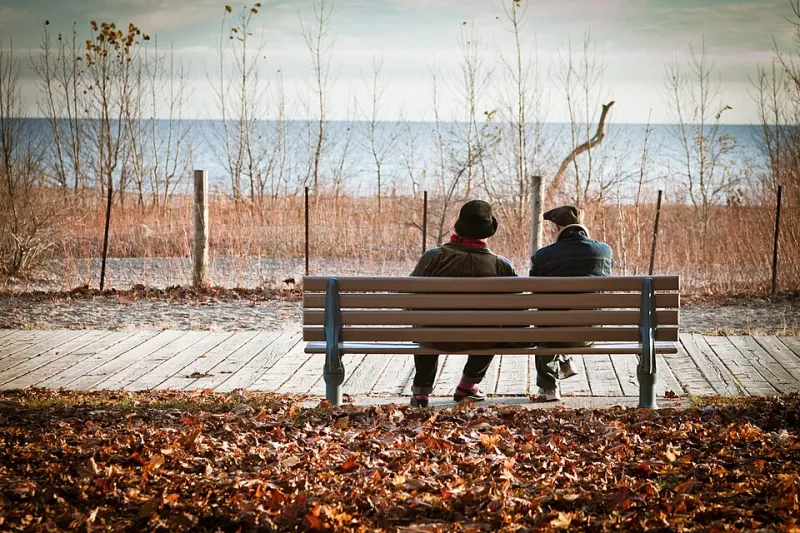
Photo: Benson Kua from Toronto, Canada, CC BY-SA 2.0, via Wikimedia Commons
There's a moment in late January — somewhere around the third week, when the holiday lights are long gone and the credit card statements have arrived — when a strange calm settles over everything. Nothing is happening. Nobody expects anything of you. There is no event to prepare for, no trip to count down to, no centerpiece to construct.
For decades, we treated this stretch of the calendar as a problem to be endured. The post-holiday lull. The dog days. The dead zone. But a quiet shift has been underway, and if your social feeds are any indication, Americans have started to figure out what Europeans kind of always knew: the offseason is the whole point.
The Shoulder Season Pilgrims
Start with travel. For years, the American vacation operated on a simple logic: go when everyone goes, pay what everyone pays, stand in line with everyone in line. Then inflation did what a thousand travel blogs couldn't — it made people do the math.
The result is a full-blown shoulder season migration. Coastal towns in October, when the water's still swimmable and the rental prices drop by half. National parks in late September, when the crowds thin out and the elk start getting bold. Europe in February, when you can actually get a reservation at the restaurant and the locals, freed from tourist season, are suddenly chatty.
The people doing this aren't just saving money, though they're saving a lot of it. They've noticed something else: places are better when they're not performing for peak season. The bartender has time to talk. The trail isn't a conga line. You get the place itself, not the queue for the place.
Romanticizing the Lull
But the offseason trend runs deeper than travel deals. Look at how people talk about the quiet months now. Late summer's final slow weeks. That strange golden window between Thanksgiving and the winter holidays. Even the much-maligned stretch of February has its evangelists — the soup-and-a-blanket crowd, the people who've decided that a month with no social obligations is not a failure state but a gift.
Part of this is pure economics of attention. We live in a hype cycle that never stops spinning — every weekend has a drop, a premiere, a limited-time thing you're supposed to care about. The offseason months are the only time the machine pauses. There's no cultural event demanding your opinion. Nobody's asking what you thought. You can just... exist.
And people are discovering that existing is underrated. The January walk with nowhere to be. The February evening with a book and no group chat obligations. These are not consolation prizes. For a growing number of people, they're the best part of the year.
What Burnout Does to a Calendar
It would be naive to pretend this is all about aesthetics. The embrace of the offseason is, at least in part, a symptom. Americans are tired in a way that's hard to schedule around, and the constant cadence of peak experiences — peak season, holiday season, award season, whatever season the internet has decided is happening — leaves no room to come down.
There's a reason the phrase 'recovery week' has migrated from athletics into regular vocabulary. Athletes learned long ago that growth doesn't happen during the peak; it happens during the rest that follows. The rest isn't the absence of training. It is the training. Somewhere along the way, ordinary life forgot this, and the calendar became a wall of peaks with no valleys between them.
The offseason revival is people manually reinserting the valleys. Declining the February trip. Protecting the quiet weekend. Choosing the shoulder season not because it's a hack, but because arriving somewhere unrested defeats the entire purpose of going.
The Offseason State of Mind
Here's the thing, though — you don't have to fly anywhere to live this way. The offseason is less about a month on the calendar than about a stance toward your own life. It's the decision that not every stretch of time needs to be maximized. That a Saturday with nothing on it is a completed Saturday, not a wasted one.
The peak season will always have its appeal. The fireworks, the crowds, the sense of being where it's happening. But 'where it's happening' is a location you can only stand in for so long before your legs give out. The offseason asks a different question: what if the best part isn't the event at all, but the long, unglamorous, deeply restful stretch on either side of it?
Peak season is for tourists. The offseason is for people who actually live somewhere — even if that somewhere is just their own calendar, finally with some space in it.