Scroll Sad: The Unsettling Way Your Apps Clock Your Loneliness Before Anyone Else Does
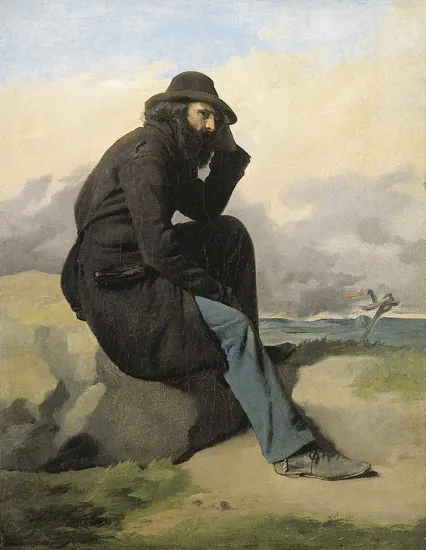
Photo: Antonio Ciseri, Public domain, via Wikimedia Commons
It starts small. You're up at 1 a.m. on a Tuesday, rewatching the same comforting video for the fourth time, tapping through strangers' vacation photos with a hollow kind of autopilot. Nothing feels wrong, exactly. You're just... drifting. But somewhere behind the screen, a system is taking notes.
Your favorite apps aren't just serving you content. They're reading you. And according to a growing body of research — plus some uncomfortable revelations from inside the tech industry itself — they may be remarkably good at detecting when you're emotionally low, isolated, or quietly falling apart. Better, in some cases, than the people who actually know your name.
The Data Trail You Didn't Know You Were Leaving
Every interaction you have on a social platform is a data point. How long you pause on a post. Whether you watch a video to the end or bail after three seconds. The time of day you're active. How often you post versus how often you just lurk. Whether your comments are getting shorter, or stopping altogether.
Individually, these signals mean almost nothing. But fed into a machine learning model trained on millions of users, they start to form a portrait — one that can, with surprising accuracy, suggest you're going through something.
A 2023 study from researchers at MIT and Harvard found that patterns in social media usage — specifically reduced posting frequency, increased passive scrolling, and late-night engagement spikes — correlated strongly with self-reported feelings of loneliness and depression. The algorithm didn't need you to say anything. It just watched how you moved through the app.
This isn't theoretical. In 2017, internal Facebook documents (later reported on by The Australian) revealed that the platform had pitched advertisers on its ability to identify when teens felt "worthless," "insecure," or "like a failure" — in real time, based on behavioral signals. Facebook denied it was using this data for ad targeting, but the fact that the capability existed at all sent a chill through the mental health community that hasn't fully thawed.
When the Feed Becomes a Mirror
Talk to anyone who's gone through a breakup, a job loss, or a quiet season of isolation, and they'll often describe the same eerie experience: the feed just knew. Suddenly it's all sad indie playlists, "it's okay to not be okay" affirmations, and targeted ads for therapy apps like BetterHelp or Headspace.
Jessica, a 29-year-old teacher from Columbus, Ohio, describes the feeling vividly. "After my mom passed, I wasn't posting anything. I wasn't even really engaging. But within a week, my Instagram was wall-to-wall grief content and memorial jewelry ads. I hadn't told the app anything. It just... figured it out."
That experience — of being emotionally profiled without consent — is becoming more common as platforms refine their behavioral models. And it raises a genuinely uncomfortable question: is this a feature or a form of digital surveillance dressed up as personalization?
The Argument for 'Helpful'
To be fair, the tech industry has a ready answer for this, and it's not entirely wrong. Platforms like TikTok, Instagram, and YouTube have all rolled out mental health resources that surface when users engage with certain types of content — searches related to self-harm, for instance, or extended engagement with content flagged as emotionally heavy.
Dr. Renee Carr, a clinical psychologist who consults with digital wellness organizations, sees genuine potential in algorithmic awareness. "If a platform can detect that someone is spiraling before they even articulate it themselves, and route them toward a crisis line or a helpful resource, that's not nothing," she says. "That's a real intervention that might not have happened otherwise."
And there's something to that. In a country where the average wait time to see a therapist can stretch into months, and where plenty of people still feel the sting of stigma around asking for help, a well-timed nudge from an app isn't automatically sinister.
But here's the thing: that same data doesn't just go to the crisis resource widget. It also goes to the ad auction.
The Part That Should Bother You
Mental and emotional vulnerability is, in the cold language of digital advertising, a high-value targeting signal. Someone who is lonely, grieving, or anxious is statistically more susceptible to certain purchasing decisions. Subscription services. Comfort purchases. Social apps promising connection. The entire "self-improvement" industrial complex that has metastasized across every platform.
This is where the conversation gets darker. Because the same inference engine that might surface a crisis hotline for a struggling teenager can also flag that teenager as a prime candidate for a predatory subscription or an MLM pitch. The algorithm doesn't have ethics. It has objectives.
Dr. Safiya Umoja Noble, author of Algorithms of Oppression, has written extensively about the ways automated systems can cause harm while appearing neutral. The concern, she argues, isn't just what platforms do with emotional data — it's that users have no meaningful way to opt out, and no real visibility into how their vulnerability is being packaged and sold.
Most of us click "agree" on privacy policies that would take four hours to read in full. We don't know what we've consented to, and the companies involved have very little incentive to tell us.
What It Means When an App Knows You Better Than Your Friends Do
There's something philosophically disorienting about this whole thing that goes beyond the policy debate. We live in a moment when loneliness is at near-record levels in the United States — the Surgeon General literally declared it a public health epidemic in 2023. And yet the entities best equipped to detect our isolation are the same platforms that, many researchers argue, helped create it in the first place.
The algorithm knows you're sad. But it didn't check in on you. It didn't text. It didn't show up with food. It just quietly updated your targeting profile and served you an ad for a weighted blanket.
Meanwhile, your college roommate had no idea.
That gap — between what our technology perceives and what our human relationships actually deliver — might be one of the defining tensions of this moment in American life. We've built tools of extraordinary sensitivity, and we've pointed them almost entirely at profit rather than care.
So What Do You Actually Do With This?
Short of deleting every app (which, as we've explored before, comes with its own psychological complications), there are a few things worth doing. Regularly auditing your app permissions is a start — many platforms allow you to limit data sharing in ways most users never explore. Being intentional about when you scroll matters too; late-night passive browsing is both a symptom and a feeder of the emotional states these systems are designed to detect.
But maybe the more important move is a human one. If your feed is serving you grief content and you haven't told anyone why, that's a signal worth paying attention to — not because the algorithm is your friend, but because it might be reflecting something you've been keeping to yourself.
The app noticed. Now it's your turn to tell someone who actually cares.