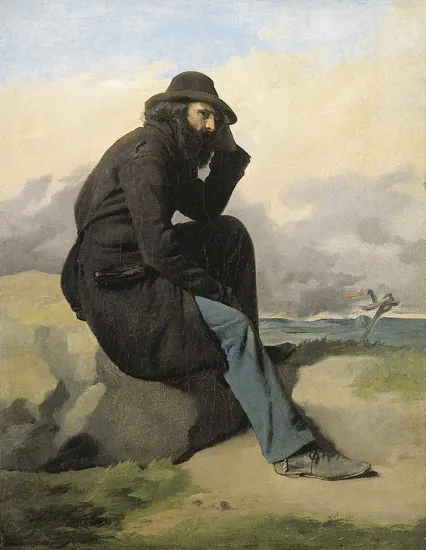
Your Brain Is Running on Empty — And Your Phone Is the Reason Why

Photo: Mohammad Marshad Bin Khaled, CC0, via Wikimedia Commons
You woke up with zero plans. No work calls, no obligations, nothing on the calendar. By 4 p.m., you'd watched some videos, scrolled a few feeds, maybe bounced between three different streaming services before giving up and rewatching something you've already seen. And now? You're exhausted. Genuinely, bone-tired exhausted.
So what happened?
Nothing, technically. And that's exactly the problem.
The Hidden Price Tag on Your Attention
Here's a concept that doesn't get nearly enough airtime outside of academic circles: cognitive load. It's the mental energy your brain burns just to process information, make decisions, and shift between tasks. And the kicker is that your brain doesn't really distinguish between important decisions and trivial ones. Choosing a show to watch pulls from the same mental reservoir as deciding whether to accept a job offer. The scale is different, but the currency is the same.
Now consider how many micro-decisions you're making on any given day. Which notification to check first. Whether that news headline is worth clicking. What to eat based on three different delivery apps offering forty cuisines each. Whether to keep scrolling or actually watch the thing you just queued up. Researchers call this phenomenon decision fatigue, and it's been quietly draining Americans for years — long before smartphones made it a 24/7 situation.
The attention economy didn't create human distraction. But it absolutely weaponized it.
Context-Switching Is Quietly Wrecking You
There's a reason your workday feels three times longer than it used to, even when you're technically doing less. The culprit isn't your workload — it's the constant context-switching that modern digital life demands.
Every time you flip from a work email to a meme your friend texted you to a breaking news alert to a TikTok someone sent — and then try to go back to the email — your brain has to perform what psychologists call a "cognitive reset." It sounds small. It is small. But multiply that by dozens of times an hour, across an entire day, and you're essentially making your brain sprint short distances over and over instead of settling into a sustainable pace.
Gloria Mark, a professor at UC Irvine who has spent years studying digital distraction, found that it takes an average of about 23 minutes to fully regain deep focus after an interruption. Twenty-three minutes. And most Americans are interrupted — or self-interrupt — far more frequently than that. Do the math and you'll realize sustained concentration has basically become a superpower.
Leisure Shouldn't Feel Like Labor
Here's where it gets particularly frustrating: this exhaustion isn't just hitting us at work. It's eating into our downtime, too.
Leisure used to be a refuge. You watched TV, and that was the thing you were doing. You listened to music, and that was the thing. Now, leisure is layered. You're watching a show while checking your phone while half-following a group chat while also technically being "available" in case someone needs you. There's no clean psychological boundary between rest and engagement anymore, and that blurring is costing us.
Psychologists describe this as continuous partial attention — a state where you're never fully present in any one activity because some part of your brain is always scanning for the next input. It was coined by former Apple and Microsoft exec Linda Stone back in the nineties, which tells you this wasn't born with TikTok. But the platforms we use today have turbocharged it into something almost inescapable.
The result? Even fun things feel like a chore. You're "relaxing" but you don't feel rested. You're consuming entertainment but you're not actually entertained. That weird numbness after a long scroll session isn't boredom — it's depletion.
The Paradox of Infinite Options
Netflix famously has tens of thousands of titles. Spotify has over 100 million tracks. Your local grocery store carries an average of 30,000 to 50,000 products. Choice, we were told, is freedom.
Psychologist Barry Schwartz would like a word.
In his landmark work on what he called the "paradox of choice," Schwartz laid out a counterintuitive truth: more options don't make us happier or more satisfied. They make us more anxious, more prone to second-guessing ourselves, and more likely to feel like we made the wrong call — even when we made a perfectly fine one. The mental overhead of evaluating options, comparing them, and committing to one while quietly mourning the others is exhausting in a way that's hard to articulate but very easy to feel.
This is why you can spend 45 minutes browsing a streaming platform and still end up watching nothing. The decision itself became the activity, and by the time you've finished "choosing," you're too tired to actually enjoy the thing.
So What Do We Actually Do About This?
Let's be real — nobody's deleting their apps and moving to a cabin. That's not the answer, and honestly, it probably wouldn't even work (as anyone who's tried a digital detox and felt weirdly worse can confirm). But there are smaller, more sustainable shifts that actually help.
Batch your decisions. Instead of making tiny choices all day, consolidate them. Pick your meals for the week on Sunday. Choose your show before you sit down on the couch. These sound minor, but they genuinely reduce the number of cognitive resets your brain has to perform.
Create hard edges around your leisure. When you're watching something, watch it. Phone in another room, notifications off, full commitment. It sounds almost aggressively simple, but single-tasking during downtime is one of the most effective ways to actually feel rested afterward.
Audit your notification settings — for real this time. Most of us have dozens of apps pinging us for attention we never consciously agreed to give. Going through and turning off non-essential notifications isn't just a productivity tip; it's an act of basic mental self-preservation.
Let yourself be bored, occasionally. Boredom has gotten a terrible reputation, but it's actually when your brain does some of its best work — consolidating memories, generating ideas, and just... recovering. The reflex to fill every idle second with content is understandable, but it's also part of what's draining the tank.
The Bigger Picture
The exhaustion so many Americans are feeling right now isn't entirely personal. It's structural. We've built — and then eagerly adopted — systems specifically designed to capture and hold attention, without much thought for what that constant capture costs the people on the other end of the screen.
That doesn't mean we're helpless. But it does mean that "just relax" is genuinely bad advice for a culture that has accidentally turned relaxation into another performance. Reclaiming actual rest requires a little more intentionality than that.
Your brain is working harder than you think, even when you think you're doing nothing. Maybe especially then. And the first step to feeling less depleted is simply acknowledging that the toll is real — even if nobody's sending you a bill.