Gloriously Unproductive: How Embracing Boredom Became the Quiet Revolution Nobody Saw Coming

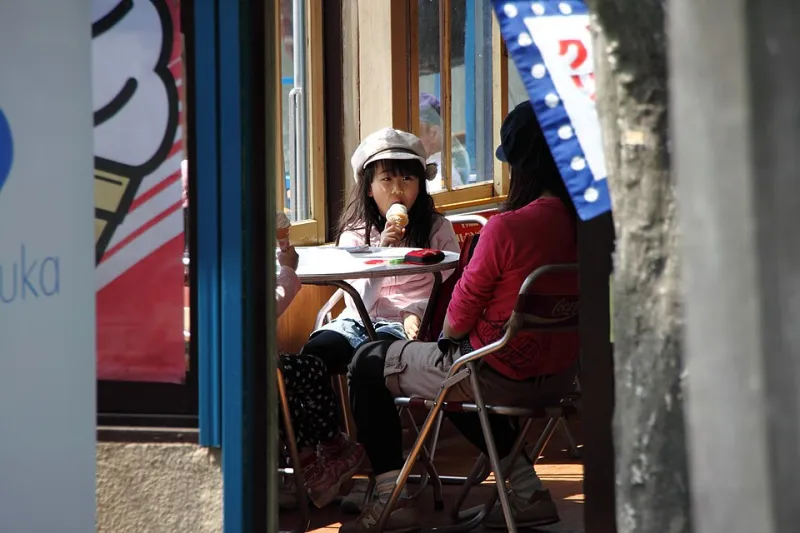
Photo: PattayaPatrol, CC BY-SA 4.0, via Wikimedia Commons
Somewhere between your third podcast episode of the morning and your fourteenth calendar notification before noon, a strange thought might creep in: What if I just... didn't? No task, no content, no optimized breathwork routine. Just you, a window, and the slow passage of time.
For most of us, that thought lasts about four seconds before anxiety kicks in and we reach for our phones. But a quieter cultural movement is pushing back — hard — against the idea that every waking moment needs to be monetized, tracked, or at minimum productive. And the weapon of choice? Good old-fashioned boredom.
The Productivity Trap We All Walked Into
Let's be honest: America has a doing problem. We've spent the better part of two decades treating busyness like a personality trait and output like a moral virtue. The hustle culture of the early 2010s gave way to "soft productivity" aesthetics on YouTube, which gave way to algorithmic self-optimization apps that literally score your daily habits. We didn't just drink the Kool-Aid — we made a podcast about it and monetized the recipe.
Dr. Sandi Mann, a psychologist who has studied boredom extensively, has argued for years that our cultural allergy to idle time is actually costing us something essential. "When we're bored, the mind doesn't shut off — it wanders," she's noted in various interviews. "And that wandering is where creativity, problem-solving, and genuine self-reflection live."
The irony is almost too on the nose: in our frantic effort to be more productive, we've systematically eliminated the mental state most likely to generate original thought.
Boredom as Rebellion
Call it the revenge of the empty afternoon. On social media — yes, the very thing designed to eliminate boredom — a counterculture is quietly forming. "Niksen," the Dutch concept of doing nothing with no particular purpose, started circulating in wellness spaces a few years back. "Solitude practice" became a buzzword in therapy circles. And increasingly, younger Americans are treating an unscheduled Saturday not as a failure of planning but as an act of resistance.
Twenty-six-year-old graphic designer Maya from Portland told us she started what she calls "dead hours" — two-hour windows on weekend afternoons where she puts her phone in another room and does whatever feels natural. Sometimes she draws. Sometimes she stares at the ceiling fan. "I used to feel guilty about it," she said. "Like I was falling behind somehow. Now I think it's the most honest thing I do all week."
That reframing — from laziness to liberation — is at the heart of what's shifting. Doing nothing is no longer being coded as failure. It's being reclaimed as a practice.
What Your Brain Actually Does When You Unplug
Here's where it gets genuinely interesting. Neuroscience has been making the case for idle time for a while now, but the message hasn't exactly gone viral. When your brain isn't focused on a specific task, it activates what researchers call the "default mode network" — a system associated with daydreaming, memory consolidation, empathy, and yes, creativity.
In plain English: your brain does some of its best work when you think it's doing nothing.
The problem is that we've become so skilled at interrupting this process — notifications, autoplay, the reflexive grab for a phone during any lull — that many of us rarely reach that state at all anymore. It's like trying to dream when you keep waking yourself up every thirty seconds.
Dr. Jonathan Smallwood, a cognitive neuroscientist, has suggested that mind-wandering isn't a bug in human cognition — it's a feature. One we've been aggressively patching out of our lives with digital stimulation.
Artists Who've Been Here All Along
Interestingly, the creative community has been quietly making this argument for decades. Writers, painters, and musicians have long treated boredom not as something to escape but as a raw material to mine.
Novelist and essayist Walter Kirn once wrote that "the imagination needs boredom the way a fire needs oxygen." Musicians from Brian Eno to early-career Taylor Swift have talked about the strange fertility of genuinely unoccupied time — those long, directionless hours that eventually crystallize into something worth saying.
Chicago-based illustrator Dominic, 33, describes boredom as "the loading screen before the good stuff." He deliberately builds unscheduled time into his week, not to rest exactly, but to let his mind "get weird." "Some of my best ideas come from just sitting in a coffee shop without my sketchbook, not trying to do anything," he said. "The moment I stop hunting for ideas, they kind of show up uninvited."
The Algorithmic Enemy of the Empty Moment
Of course, there's a reason this is harder than it sounds. Every major platform you use is engineered — at considerable expense and with considerable sophistication — to ensure you never experience a single boring moment. Infinite scroll, autoplay, personalized recommendations: these aren't features designed for your wellbeing. They're features designed to colonize the exact mental space where boredom used to live.
And the costs are real. Attention spans are shorter. Tolerance for discomfort is lower. The ability to simply be somewhere without documenting or consuming it has become, for many people, genuinely difficult.
That's why some therapists are now prescribing what they're calling "structured boredom" — intentional periods of low-stimulation time built into daily life the way you'd build in exercise or sleep. Not meditation necessarily, not journaling, not a productivity-adjacent "morning routine." Just time that doesn't have a goal.
So How Do You Actually Do Nothing?
Fair question, and slightly funny that we need instructions. But here's what people who've made peace with idle time tend to say:
Start small. Ten minutes without your phone, without music, without a task. Sit outside. Look around. Feel how uncomfortable it is at first — that discomfort is the withdrawal talking.
Don't gamify it. The second you start tracking your "boredom sessions" in an app, you've missed the point entirely.
Lower the stakes. This isn't about unlocking creativity or achieving some meditative state. It's just about existing without an agenda for a few minutes. The benefits are a side effect, not the goal.
Let it be boring. That's kind of the whole thing.
The Radical Ordinary
There's something almost funny about the fact that in 2025, sitting quietly in your own living room feels like a countercultural statement. But here we are. In a world built to capture every second of your attention and convert it into someone else's revenue, choosing to be bored — genuinely, unproductively, gloriously bored — is one of the few acts left that's entirely yours.
Maybe that's the pulse of something real: not a trend, not a wellness hack, not a rebrand of laziness. Just the quiet, stubborn insistence that your mind belongs to you, and sometimes it just needs to wander.