Logging Off Made It Worse: The Weird Psychology Behind Digital Detox Backfires

Somewhere between your third late-night TikTok spiral and the fourteenth notification you ignored before bed, you probably thought about quitting. Not quitting-quitting — just, you know, taking a break. A weekend without Instagram. A week off Twitter. Maybe a full phone-free Sunday where you drink coffee and stare meaningfully out a window like someone in a slow-burn indie film.
The problem? For a lot of people, that break doesn't feel like relief. It feels like withdrawal.
And the science, it turns out, is pretty firmly on the side of your anxiety.
The Detox That Feeds the Beast
Here's the uncomfortable truth about digital detoxes: the very act of stepping away can make you more obsessed with what you're missing. Behavioral psychologists call it "reactance" — a fancy term for the mental rebellion that kicks in the moment something gets taken away from you. Tell yourself you can't check your phone, and suddenly your phone is the most interesting object in the known universe.
"When we restrict access to something that's been delivering consistent dopamine hits, the brain doesn't just quietly accept that," explains Dr. Marissa Calloway, a behavioral neuroscientist who studies digital habit formation. "It actually amplifies the craving. You're not resting the reward system — you're agitating it."
This is partly why so many people who attempt a "seven-day screen fast" end up in what researchers informally call a rebound loop: they survive the detox, then spend the first 48 hours back online consuming content at a rate that would make their pre-detox selves look practically Amish. The brain is making up for lost time, and it does not mess around.
FOMO Is Doing a Lot of Heavy Lifting Here
Fear of missing out isn't a new concept — humans have always had it to some degree. But the internet industrialized FOMO in a way that makes the old version look quaint. Pre-smartphone FOMO was finding out on Monday that your friends had a great weekend without you. Today's FOMO is real-time, constant, and algorithmically optimized to feel as acute as possible.
When Marcus T., a 29-year-old graphic designer from Chicago, tried a two-week Instagram detox last spring, he expected to feel liberated. Instead, he spent the first four days mentally cataloging everything he would have posted. "I'd be at brunch and think, 'This would've been a Story.' Then I'd feel weird for thinking that. Then I'd feel weird about feeling weird," he says. "By day five I was more consumed by Instagram than I'd ever been when I actually had it."
That experience isn't unique to Marcus. A 2023 study published in the Journal of Social and Clinical Psychology found that participants who took forced breaks from social media reported higher anxiety about social relevance — not lower — during the first week of abstinence. The detox, paradoxically, made the thing they were detoxing from feel more important.
The Performative Wellness Trap
There's another layer to this that doesn't get talked about enough: the social performance of the detox itself. In 2024, announcing that you're taking a break from social media is, itself, a social media move. The "I'm logging off for a while, take care of yourselves" post has become its own genre — complete with a predictable return arc and a reflective comeback thread about what you learned.
This isn't cynicism, it's just pattern recognition. The detox has been absorbed into the content cycle it was supposed to escape. And when the detox becomes content, it stops being a genuine reset and starts being another way to perform wellness for an audience.
"There's real social currency in being the person who 'needed a break,'" says Dr. Priya Mehta, a clinical psychologist based in New York who works with clients on technology-related anxiety. "It signals that you're self-aware, that you value your mental health. But if the break is fundamentally performative, you haven't actually changed your relationship with the platform — you've just added a new plot point to your personal brand."
So What Actually Works?
If cold-turkey detoxes backfire and performative logging-off is just content in disguise, what does a genuinely healthy relationship with screens even look like?
The emerging consensus among behavioral scientists leans toward what some call "intentional friction" — not elimination, but deliberate inconvenience. This might mean keeping your phone in a different room during meals, turning off all non-essential notifications permanently (not just for a week), or designating specific windows of time for social media rather than leaving it open-ended.
The key distinction, according to Dr. Calloway, is agency versus deprivation. "When you feel like you're choosing not to check your phone, you're exercising a muscle. When you feel like you can't check your phone, you're just white-knuckling it. One builds a new habit. The other just delays the old one."
Jayla R., a 34-year-old teacher from Atlanta, tried a different approach after two failed detox attempts. Instead of going cold turkey, she started using her phone's Screen Time feature to cap social media at 45 minutes a day — and kept the limit in place indefinitely. "It felt less dramatic, honestly. But after about three weeks, I genuinely stopped thinking about it as much," she says. "I wasn't 'on a break.' I just... wasn't as into it."
That low-drama version of change might be the whole point. The wellness industry loves a grand gesture — the 30-day challenge, the total cleanse, the radical reset. But behavioral change research consistently shows that small, sustainable shifts beat dramatic overhauls almost every time.
The Attention Economy Doesn't Want You to Succeed
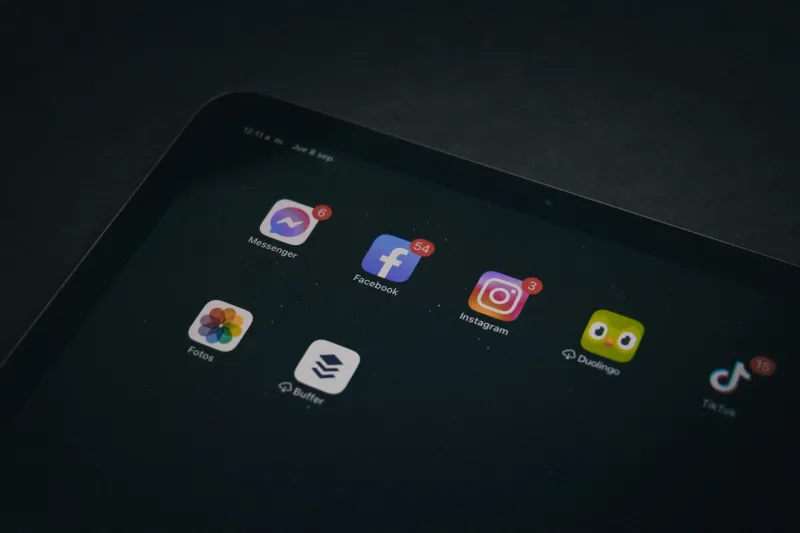
It's also worth naming the obvious: the platforms themselves are not neutral parties in this conversation. Every algorithm, every autoplay feature, every red notification bubble is engineered by teams of very smart people whose literal job is to make leaving feel costly. The attention economy has a vested interest in making digital detoxes feel impossible — and in making you feel like the failure when they don't stick.
That's not to say personal responsibility doesn't matter. It does. But framing this entirely as an individual wellness problem lets some very large companies off the hook for architecture that was deliberately designed to be hard to walk away from.
The most honest thing you can probably do is hold both truths at once: yes, you can build better habits, and yes, the system is stacked against you. Neither one cancels the other out.
The Real Reset
If you're genuinely looking to recalibrate your relationship with screens, the research points toward one underrated strategy above all others: replace, don't just remove. The brain hates a vacuum. When you take away the scroll, it needs something to fill that slot — ideally something that delivers its own rewards, even if they're slower and quieter.
Reading a physical book. Going for a walk without earbuds. Cooking something that requires actual attention. None of it sounds as transformative as a full digital detox. But it works better, lasts longer, and doesn't require you to announce it to anyone.
Which, honestly, might be the most radical thing you can do online right now: nothing.