The Unglamorous Comeback: Why Boring Hobbies Are the New Flex
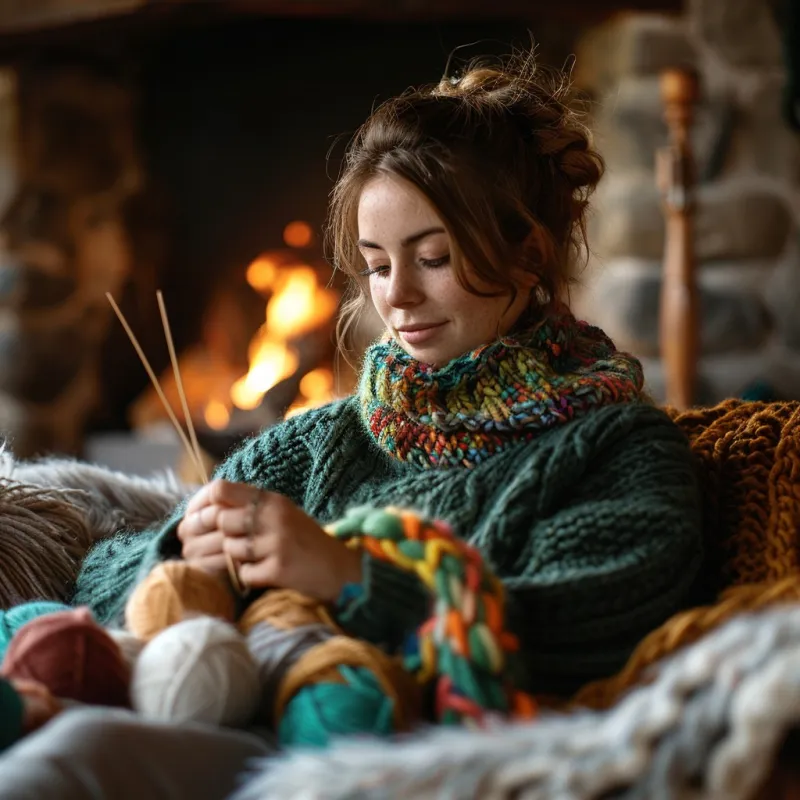
Photo: person knitting cozy hobby at home peaceful, via images.stockcake.com
Somewhere between the fourth tutorial video on how to monetize your passion and the fifteenth notification asking you to rate your experience, something snapped. Not loudly — there was no dramatic logout or tearful manifesto. Just a quiet retreat. A lot of people, Gen Z and millennials especially, started picking up activities that nobody was going to double-tap. Jigsaw puzzles. Sourdough starters that never get posted. Model aircraft assembled in garages with the Wi-Fi off.
Call it the unglamorous comeback. Boring hobbies — the kind your grandparents did without a hashtag — are back, and they're carrying a surprising amount of cultural weight.
When 'Just for Fun' Got Complicated
For a while there, the internet made it feel almost irresponsible to enjoy something without leveraging it. Got into watercolor painting? You should probably start a YouTube channel. Really into sourdough? An Instagram account is basically mandatory. The pressure wasn't always explicit, but it was constant — a low hum underneath every leisure activity whispering, this could be content.
And honestly, that pressure worked on a lot of people. The creator economy ballooned. Side hustles multiplied. Entire industries sprouted up around the idea that your hobbies were really just undiscovered revenue streams waiting to be tapped.
But optimization has a ceiling. At some point, turning every passion into a performance stops feeling like empowerment and starts feeling like a second job — one with worse hours and a comment section.
The Subtle Rebellion Hiding in Plain Sight
What's happening now isn't exactly a backlash. It's quieter and more personal than that. People aren't boycotting the internet or writing op-eds about unplugging (well, some are, but that's a different article). They're just... picking up knitting needles. Buying seed packets. Spending Sunday afternoons doing something that will never, under any circumstances, make them money or followers.
And here's the twist that nobody really saw coming: doing something genuinely unproductive has become its own kind of status symbol.
In a culture that still heavily rewards hustle, choosing a hobby specifically because it has no ROI is a power move. It signals that you have enough — enough security, enough self-worth, enough distance from the anxiety machine — to waste time on purpose. That's not nothing. In fact, for a lot of younger Americans drowning in productivity culture, it's kind of everything.
Talk to people in their mid-twenties who've picked up model-building or cross-stitch and you'll hear a version of the same thing over and over: I just wanted something that was mine. Something that didn't have to perform. Something with a beginning, a middle, and an end that existed entirely offline.
What These Hobbies Actually Offer
There's a reason these particular activities are making a comeback rather than, say, competitive gaming or podcast production. Knitting, gardening, model-building, birdwatching, amateur astronomy — they share a few key qualities that feel almost radical right now.
They're tactile. You use your hands. You feel materials. There's a physical reality to the outcome that no amount of scrolling can replicate. In a world where so much of daily life happens on a screen, the sensation of soil under your fingernails or yarn looping through your fingers hits differently.
They're slow on purpose. A vegetable garden doesn't care about your timeline. A 1,000-piece puzzle isn't going to rush itself. These hobbies enforce a pace that modern life rarely allows, and a lot of people are discovering that the enforced slowness is actually the whole point.
They have built-in failure modes that don't matter. Your soufflé collapsed? Your seedlings didn't sprout? Your model plane looks a little rough? Nobody cares. More importantly, you don't have to care in the way you would if this were your brand or your livelihood. Low stakes are a luxury that's been quietly disappearing, and these hobbies hand it back to you.
The Community That Doesn't Need an Audience
Here's where it gets interesting: these hobbies aren't happening in total isolation. There are knitting circles meeting in coffee shops across the country. Gardening clubs are seeing membership bumps they haven't experienced since the 1970s. Model train forums — yes, actual forums — are experiencing a renaissance among users who are decidedly not retirement age.
The difference is that these communities exist largely for themselves. The knitting circle isn't performing for anyone. The gardening club's Instagram might have 200 followers and nobody's losing sleep over it. The model train guys are just... really into model trains. There's something almost countercultural about a community that isn't trying to scale.
It's a different kind of social connection than what the algorithm provides — messier, more local, less curated, and apparently more satisfying for a lot of people who've grown tired of engagement metrics as a measure of belonging.
The Aesthetic That Isn't Trying
You might have noticed that some of this stuff is showing up online — but in a weirdly anti-aesthetic way. Blurry photos of lopsided knitting. Slightly muddy garden updates. Model builds that are clearly works-in-progress and not particularly impressive. The content exists, but it's conspicuously not trying to be content. It's documentation rather than performance, and the audience for it seems to appreciate exactly that quality.
It's the visual equivalent of a shrug. Which, in a feed full of carefully composed shots and optimized thumbnails, reads as genuinely distinctive.
So What's the Takeaway?
If there's a cultural lesson buried in the resurgence of unglamorous hobbies, it's probably this: people are hungry for experiences that don't ask anything of them. Not their data, not their attention span, not their personal brand. Just their time and their hands.
The hobbies themselves almost don't matter. It's the quality of the engagement — absorbed, purposeless, completely your own — that people are chasing. And right now, you're more likely to find that in a gardening bed than on a For You page.
Maybe the most radical thing you can do in 2025 is get really, genuinely into something that will never, ever make you famous. Turns out, that sounds pretty good to a lot of people.